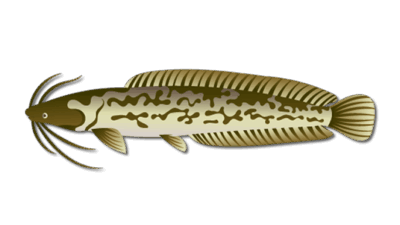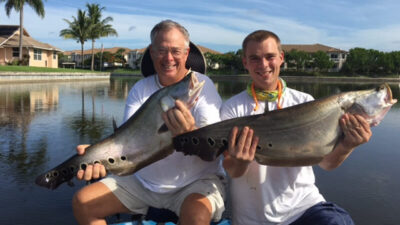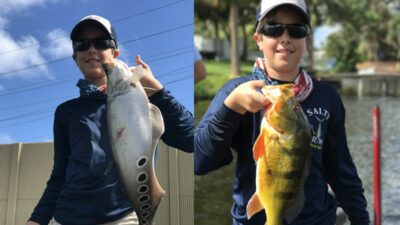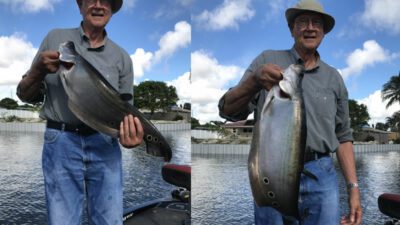














Other Names: Clown ghost knife fish, Clown Knife fish, Blade Fish, Spotted clown, or Chitala ornata
Description:
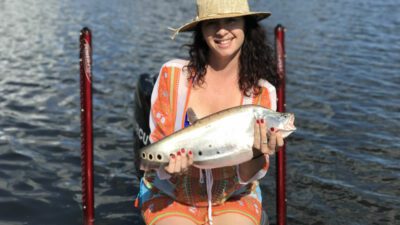
The Chitala ornata, also known as the clown knifefish, is a nocturnal freshwater fish native to the tropical habitats of Southeast Asia. This species is native to the rivers of Cambodia, Thailand, and Vietnam, and has been introduced to other regions through the popular distribution of aquarium fish. It has now become one of the world’s most invasive freshwater species, currently thriving in South Florida. Also known as clown featherback or spotted knifefish, the clown knife fish can grow over three feet long in the wild and is a highly sought-after game fish now in the freshwater habitats of Palm Beach. The best fisheries to catch this exotic invasive species are Lakes Osborne and Ida.
They are a unique freshwater fish species with the ability to swim backward using their bottom fin. They can also breathe air to survive in low-oxygen, stagnant waters.
Clown knife fish Appearance
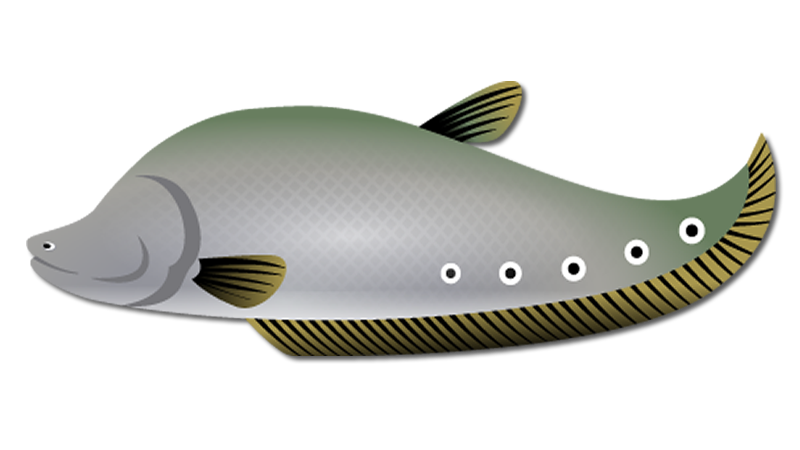
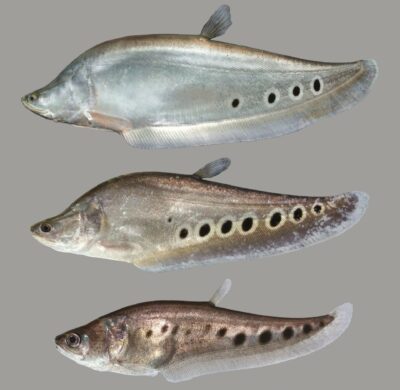 Clown knifefish are flat, silvery fish with an elongated body, a humpback, and a long anal fin that gives the knifefish its common name. They have a tiny dorsal fin and 5-10 black spots ringed with white that distinguishes them from all other fish in Florida; juveniles possess dark vertical bands instead of spots. Their long anal fin equally allows for the forward and backward movements.
They have two nasal tentacles located above their toothed mouth. They have no ventral fins but a flag-like dorsal fin in the center of the body.
Range
The clown knifefish, Chitala ornata, are currently only found in Lakes Osborne and Lake Ida, and their associated canals in southeast Florida. They are native to tropical Asia–Indochina and Thailand.
Habitat
Clownknife fish live in freshwater habitats such as lakes, swamps, and river backwaters. Young clown knifefish stay in schools among submerged roots and aquatic plants; adults tend to be loners commonly found near the shorelines in areas with overhanging vegetation or docks; utilizing air to survive in warm, stagnant waters with little oxygen.
Behavior and SPAWNing Habitats
Spawning Habitats
Clown knifefish spawning reportedly occurs in the spring, when females lay thousands of eggs each on the substrate or a piece of wood. Males care for the eggs by fanning them with their tails, keeping them aerated and silt-free. Additionally, males protect the fry once they hatch. They typically begin to spawn at the start of the rainy season in grassy, flooded areas. In some regions, clown knife fish spawn when there are three consecutive days of rain, and they seek shelter in water hyacinths.
Feeding Habits
Clown knifefish feed on various prey, including small fish, grass shrimp, ghost shrimp, and insects. They are nocturnal, so they generally cruise during twilight hours, hunting any live foods that fit into their mouth.
Age and Growth
In the wild, clownknife fish can reach lengths over 3 feet, but they rarely grow over 20 inches in length in a tank. They can live up to 10 years.
Sporting Quality
The distribution of clown featherback fish is limited, but their jumping skills and unique appearance make for an exciting catch. A fishing charter on Lakes Osborne or Ida with live prey provides the best chances at hooking into one. They may also strike at dead bait or lures once in a while.
While they are most often found in aquariums in other parts, the clown knifefish is a fun addition to a Palm Beach peacock bass fishing charter in South Florida. They are known for being jumpers that will give every angler a run for their money during a fishing adventure.
Fishing Tips
Spotted knifefish are aggressive feeders that anglers can catch throughout the day, but given their nocturnal habits, an early morning fishing trip before sunrise is often best.
If fishing from shore, nighttime will often produce even more quality clown knifefish since that is typically when they are most active. The rainy season in May and June is also an excellent time to target this fish because the current created after heavy rains makes for prime fishing opportunities. One of the best ways to learn about clown knifefish is by reading the latest Florida fishing reports published by our guides in South Florida.
Equipment
Generally, the same light tackle used for largemouth and peacock bass is used for clown knifefish. A medium-action rod with a 20 lb monofilament leader will work great. Live bait or dead bait is the most effective method, but anglers can catch clown knifefish on artificial lures as well. Whichever way you choose, ensure it matches the main diet of the fish in the water at the time, such as worms, shad, or shiners. Shrimp patterns may also increase the chances of catching a large clown knife fish.
Edibility
Clown knifefish are bony but commercially important to their native Southeast Asian countries. Commonly, the flesh is minced, made into balls, and cooked with curry. In Thailand, they are deep-fried into pla krai thot krathiam and served with a spicy sauce to dip. When catching clown knife fish in South Florida, they are generally caught more often for sporting purposes than for food.
State Record
The IGFA All-Tackle world record weighed 14 pounds and was caught in Delray Beach in 2015.