

Quick answer: California has bass fishing opportunities across the year, but the best months depend on the lake, species and spawning conditions. Spring often brings bass into shallower habitat; summer, fall and winter require different depths and presentations. Check CDFW black bass regulations for the specific water before traveling.
Key Takeaways
- Bass fishing in California is a year-round activity, but understanding the seasonal behavior of bass can significantly enhance catch rates.
- Knowing the key bass species—Largemouth, Smallmouth, Spotted, and Striped Bass—and their preferred habitats is essential for successful fishing trips.
- Top locations for bass fishing include Clear Lake, Sacramento–San Joaquin River Delta, Castaic Lake, and Diamond Valley Lake, each offering unique fishing environments.
Understanding Bass Season California

California offers black bass fishing opportunities through much of the year, but there is no single statewide “bass season” that overrides water-specific regulations. Largemouth, smallmouth, and spotted/Alabama bass change depth, location, and feeding behavior as water temperature, daylight, forage, and spawning activity change. Spring is especially important because many California bass move shallow to spawn, while summer, fall, and winter often require different depth and presentation choices. Always check the current California Department of Fish and Wildlife rules for the exact water you plan to fish.
Key Bass Species in California
California is home to four main bass species: Largemouth Bass, Smallmouth Bass, Spotted Bass, and Striped Bass. Each species has unique characteristics and preferred habitats, making bass fishing in California an exciting and varied experience.
Knowing these differences allows you to choose the best spots and techniques for each bass species.
Largemouth Bass
Largemouth Bass are perhaps the most iconic and sought-after bass species in California. The northern subspecies arrived in California in 1891, while the Florida subspecies was introduced in 1959. Thanks to California’s favorable environmental conditions.

The Florida subspecies often grow significantly larger, contributing to the state’s reputation for trophy-sized Largemouth Bass. In fact, 21 of the top 25 largest Largemouth Bass catches in the US have come from California.
One of the most notable catches was at Castaic Lake, where a Largemouth Bass weighing 21 pounds and 12 ounces was landed. These bass are often found in areas where lakes regularly receive brown trout stocking, which contributes to their feeding habits. Targeting these stocked lakes can be especially effective for catching large Largemouth Bass.
Smallmouth Bass
Smallmouth Bass are primarily targeted in Northern California, where the cooler waters provide an ideal habitat for this species. These bass thrive in the cooler temperatures found in northern lakes and rivers, and they are most active and easier to catch when water temperatures rise to around 64 degrees.
The northern regions of California are particularly rewarding for anglers seeking trophy-sized Smallmouth Bass.
Popular fishing spots for Smallmouth Bass include the numerous lakes and rivers scattered throughout Northern California. These areas offer excellent opportunities for anglers to catch this feisty fish, especially during the peak seasons when water temperatures are just right.
Spotted Bass
Spotted Bass, including the Kentucky Bass and Alabama Bass subspecies, are another exciting target for anglers in California. These bass prefer warmer, moving waters, influencing their state distribution. The state record for Spotted Bass is an impressive 11 pounds, 4 ounces, showcasing the potential size of these fish in California.
Anglers looking to catch Spotted Bass should focus on areas with warm, moving water. These conditions are ideal for Spotted Bass, making them more likely to be active and feeding. Locating these habitats can significantly increase your chances of a successful fishing trip.
Striped Bass
Striped Bass are a favorite among many anglers due to their size and fighting spirit. The record weight for Striped Bass in California is a staggering 67 pounds, 8 ounces. These fish are commonly found in the San Francisco Bay region, making it a prime location for those looking to catch a big one.
The San Francisco Bay and its surrounding waters offer excellent opportunities for Striped Bass fishing. Anglers can expect to find these fish in abundance, especially during peak seasons.
Planning your fishing adventure around the habits and preferred environments of Striped Bass can lead to greater success.
Top Locations for Bass Fishing in California

California’s diverse landscape provides numerous top-tier locations for bass fishing in southern California. Each spot offers unique opportunities to catch various bass species, from expansive lakes to intricate river systems.
Hiring a local fishing charter can be a great way to gain insider knowledge on the best fishing spots and techniques. Let’s dive into some of the top bass fishing destinations in California.
Clear Lake
Clear Lake is one of California’s most renowned bass fishing destinations, known for its warm waters and thriving Largemouth Bass population.
The lake’s warmer temperatures create an ideal environment for bass, making it a hotspot for anglers. Additionally, Clear Lake is abundant with vegetation structures, providing excellent cover and feeding grounds for bass.
Effectively utilizing the vegetation structures at Clear Lake can result in more catches. Anglers should focus on areas with dense vegetation and use lures that can navigate through these structures. This approach can increase your chances of landing a big bass.
Sacramento–San Joaquin River Delta
The Sacramento–San Joaquin River Delta is a vast network of over 1,100 miles of waterways that offer extensive fishing opportunities. The Delta is characterized by shallow waters, averaging just 5 feet deep, making it accessible for various fishing methods.
This region is a prime location for bass fishing, with numerous docks and shorelines providing excellent spots to cast your line.
Accessing the Delta is made easy with over 1,000 launch ramps and 40 small marinas, facilitating convenient entry for fishing trips. Fishing from the shore or a boat in the Delta’s diverse waterways promises a rewarding bass fishing experience.
Castaic Lake
Castaic Lake is a prime destination for bass fishing enthusiasts, known for consistently producing trophy largemouth Bass. The lake’s reputation for big bass catches makes it a popular spot for fishing tournaments and casual anglers alike. Castaic Lake is the ideal destination for those aiming for a trophy-sized Largemouth Bass.
The lake’s structure and abundant fish population create ideal conditions for bass fishing. Anglers can expect to find bass near submerged structures and along the lake’s various contours, making it a dynamic and exciting location to fish.
Diamond Valley Lake
Diamond Valley Lake is known for its rocky bottom structure, complemented by submerged bushes, creating excellent habitats for bass. This artificial lake provides a unique fishing experience, with bass commonly weighing between 4 to 6 pounds. Being familiar with the lake’s structure can greatly improve your fishing success.
For the best results, focus on areas with rocky bottoms and submerged bushes. Using lures that can navigate these structures will help you catch more bass. Diamond Valley Lake’s diverse habitat makes it a must-visit destination for any serious bass angler.
Best Times to Fish for Bass in California
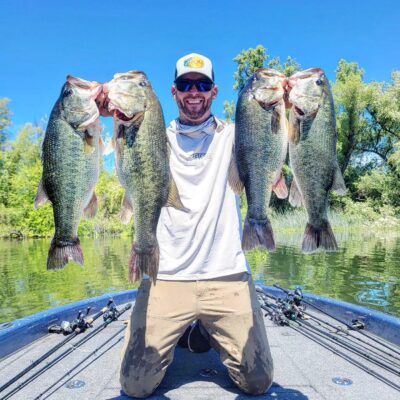 Fishing for bass in California is best timed according to the California fishing seasons. The peak activity generally occurs from spring through summer, especially for Largemouth and Smallmouth Bass. Optimal conditions include clear water and stable weather patterns, particularly in the warmer months.
Here are the best times to fish for bass throughout the year.
Spring Bass Fishing
Spring is the key spawning period for California black bass, but the exact timing varies by elevation, latitude, weather, and water temperature. In many lower-elevation waters, largemouth bass begin moving toward spawning areas as water warms through the upper 50s and low 60s, while colder northern or mountain waters may run later.
GSC data shows anglers especially want to know when bass spawn in California. A practical answer is that spawning activity commonly builds from late winter through spring in warmer Southern California waters and progresses later in cooler Northern California and higher-elevation fisheries. Treat temperature and observed fish behavior as better indicators than a fixed calendar date.
Pre-spawn bass often stage near points, secondary points, creek channels, and the first cover outside spawning flats. As fish move shallow, spinnerbaits, jerkbaits, soft plastics, jigs, and other presentations that match water clarity and forage can be effective. During the spawn, avoid assuming every visible fish should be disturbed; handle fish carefully and follow any water-specific regulations.
Summer Bass Fishing
Summer can be productive for California black bass, but fish location often changes as surface temperatures rise. Early mornings, evenings, shade, vegetation, docks, current, and deeper structure can become important. Topwater lures may produce during low-light periods, while drop shots, jigs, worms, swimbaits, and deep-running presentations can reach fish that move offshore or suspend.
Fall Bass Fishing
Fall is a transition period. Cooling water can move baitfish and bass into creek arms, flats, points, and other feeding areas. Search for concentrations of forage instead of relying on one fixed depth. Moving baits can help locate active fish, while finesse presentations remain useful when bass are pressured or conditions are stable.
Winter Bass Fishing
Winter bass fishing remains possible in many California waters, but colder water usually slows metabolism and reduces the need for constant movement. Focus on stable water, deeper structure, rock, channel edges, and areas that receive sun or retain slightly warmer water. Slow presentations, longer pauses, jigs, finesse worms, drop shots, and suspending jerkbaits can all be useful depending on the lake.
California also has separate saltwater fisheries for barred sand bass, spotted bay bass, and kelp bass (calico bass). Those ocean species follow different regulations and should not be used to define the freshwater black bass season discussed on this page.
Essential Gear for Bass Fishing in California

Having the right gear is essential for a successful bass fishing trip in California. A medium to heavy action rod provides the needed strength and sensitivity for bass fishing.
Baitcasting reels are commonly preferred due to their accuracy and control. Topwater lures are particularly effective in warmer months, attracting bass when they are most active.
Spinnerbaits can be a versatile choice, working well in various conditions and environments. Additionally, a well-organized tackle box with compartments is crucial for keeping your gear accessible and orderly.
Having the right equipment enhances your fishing experience and boosts your chances of success.
California Bass Fishing Regulations
California fishing rules vary by species and waterbody. Most anglers age 16 or older need a valid California sport fishing license, but exemptions and special rules can apply. Do not rely on an old statewide price, bag limit, size limit, or season from a blog article.
For current rules, use the California Department of Fish and Wildlife regulations page and the CDFW black bass resource. CDFW notes that regulation booklets may be revised during the year, so verify the exact lake, river, or reservoir immediately before fishing.
Black bass, striped bass, and ocean bass species are managed under different rules. Confirm the species you are targeting and whether the water has special restrictions before keeping fish.
Tips for a Successful Bass Fishing Trip
Successful bass fishing trips often come down to preparation and technique. Selecting the right bait fish is crucial: buzz baits and spinnerbaits in spring, and swimbaits and jerk baits in summer.
Emphasize colors and patterns that reflect local food sources. These often include fish like trout fishing and salmon, especially when considering bait fishing techniques.
Exploring different depths and structures, such as rocky bottoms and submerged trees, can improve your catches. Night fishing can be effective, but always check local regulations before planning your trip.
Summary
Bass fishing in California is a rewarding experience, offering diverse species and prime locations throughout the state. Understanding the seasonal patterns and the preferred habitats of Largemouth, Smallmouth, Spotted, and Striped Bass can significantly enhance your fishing success.
From Clear Lake to the Sacramento–San Joaquin River Delta, California offers diverse freshwater bass opportunities across very different habitats and seasons.
By equipping yourself with the right gear, staying informed about current regulations, and adapting to seasonal fish behavior, you can make the most of your California bass fishing. So, pack your gear, get your fishing license, and head out to California’s stunning waters. Here’s to a successful and exciting fishing season!